Targeting Helicobacter pylori enzymes using Viscum album L. extract: in silico molecular docking and in vitro study

By I. A. Cardos, Galal Yahya,…..and Simona Cavalu

Viscum album L. (mistletoe) is a hemiparasitic plant known for its wide range of bioactive compounds, including phenolics, flavonoids, and lectins, which contribute to its diverse pharmacological properties. In the present study, we focused on identifying and quantifying the phenolic compounds present in V. album L. leaf extracts and evaluating their potential as inhibitors of key Helicobacter pylori enzymes through both in silico and in vitro approaches. Using molecular docking, we assessed the binding affinity and stability of selected mistletoe’s phytochemicals with specific H. pylori targets, including peptide deformylase, shikimate pathway enzymes, and urease. Additionally, to complement the computational findings, we conducted an in vitro assay to evaluate the anti-urease activity of the crude V. album L. extract against the urease activity of Proteus mirabilis. The extract demonstrated significant inhibitory activity, indicating its potential as a natural urease inhibitor at a concentration of 0.0125 mg/mL, leading to a marked reduction in urease-mediated crystal formation in artificial urine. Furthermore, the extract exhibited broad-spectrum anti virulence effects by suppressing biofilm formation in Staphylococcus aureus and Escherichia coli, and inhibiting protease activity in S. aureus and Pseudomonas aeruginosa. Together, these findings highlight V. album phenolics as promising dual-action natural inhibitors that not only target essential metabolic enzymes but also attenuate virulence factors critical for pathogenesis. This integrated strategy positions V. album as a strong candidate for the development of plant-based therapeutics against multidrug-resistant pathogens with possible applications in the treatment of H. pylori-related gastrointestinal disorders. Copyright Simona Cavalu et al.

Biochemical pathway diagram illustrating the shikimate pathway. It starts with phosphoenolpyruvate and erythrose-4-phosphate, proceeding through intermediates like 3-deoxy-D-arabino-heptulosonate-7-phosphate and shikimate-3-phosphate, catalyzed by enzymes indicated in parentheses. The pathway leads to chorismate, which branches into compounds like prephenate and anthranilate. The diagram includes protein structures in blue and red, corresponding to specific enzymes.
shikimate pathway in H. pylori and the targeted enzymes involved in aromatic amino acid biosynthesis. Copyright Simona Cavalu et al.
Diagram showing the role of urease in H. pylori. On the left, H. pylori bacteria are depicted in the gastric mucus layer over epithelial cells. Urease breaks down urea into ammonia and carbon dioxide. On the right, chemical reactions illustrate urea conversion to ammonia and carbamic acid, leading to bicarbonate formation.
The role of Urease enzyme in the survival and colonization of H. pylori in the gastric mucosa. Copyright Simona Cavalu et al.

Molecular docking revealed strong binding affinities of caffeic acid and quercetin—major phenolic and flavonoid components of the extract—against essential H. pylori enzymes, including peptide deformylase and key enzymes of the shikimate pathway (shikimate kinase and chorismate synthase). These targets are critical for bacterial survival and are absent in humans, enhancing the therapeutic selectivity of the proposed inhibitors. Copyright Simona Cavalu et al.

Moreover, V. album exhibited extended anti virulence activity across pathogens, disrupting biofilm formation in S. aureus and E. coli, and suppressing protease activity in S. aureus and P. aeruginosa. These combined results establish V. album phenolics as dual-action inhibitors that both target essential bacterial enzymes and attenuate key virulence traits, offering a promising natural therapeutic approach against multidrug-resistant bacteria. Copyright Simona Cavalu et al.

Full text at | https://doi.org/10.3389/fcimb.2025.1690969
Therapeutic efficacy of Clompanus pubescens leaves fractions via downregulation of neuronal cholinesterases/Na+-K+ATPase/IL-1 β, and improving the neurocognitive and antioxidants status of streptozotocin-induced diabetic rats

By A. S. Onikanni, Simona Cavalu, G. El-Saber Batiha et al.

Clompanus pubescens leaf fractions displayed
hypoglycemic effect in streptozotocininduced
diabetic rats (A) Fasting blood
glucose level (FBGL) and (B) body weight of
streptozotocin-induced diabetic rats. Copyright A. S. Onikanni, Simona Cavalu, G. El-Saber Batiha et al.
Clompanus pubescens leaf fractions improved the neuronal antioxidant status of streptozotocin-induced diabetic rats. Effect of C. pubescens leaf fractions on the
level of (A) GSH and activities of (B) SOD (C) CAT, (D) GST, and (E) GPx in the brain of streptozotocin-induced diabetic rats. Copyright A. S. Onikanni, Simona Cavalu, G. El-Saber Batiha et al.
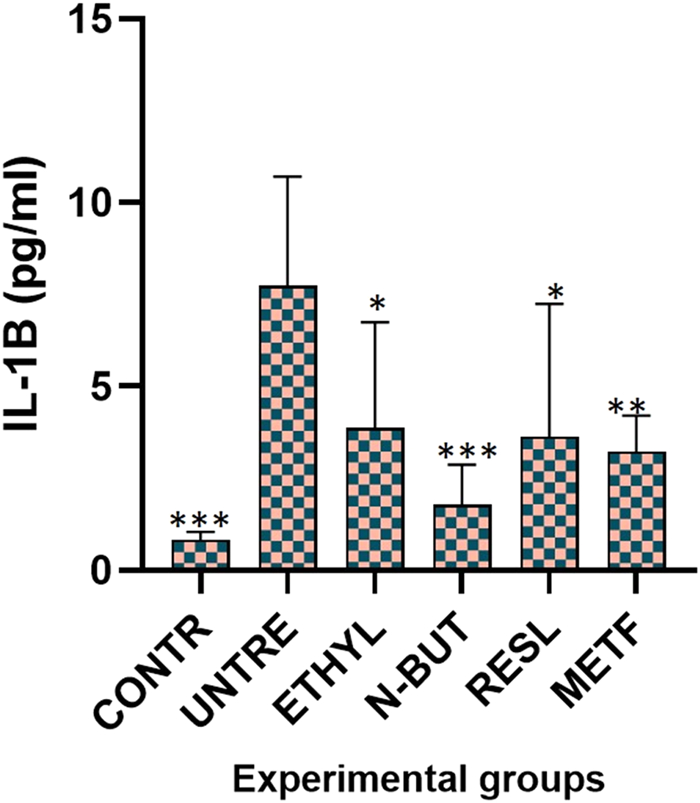
The level of Interleukin-1 β (IL-1 β) in streptozotocin-induced diabetic
rats after administration of Clompanus pubescens leaf fractions.Copyright A. S. Onikanni, Simona Cavalu, G. El-Saber Batiha et al.
Clompanus pubescens leaf fractions ameliorates
cognitive deficits in streptozotocin-induced diabetic rats.
Effect of C. pubescens leaf fractions on (A) Y-Maze test, and
(B) novel object recognition (NOR) test.Copyright A. S. Onikanni, Simona Cavalu, G. El-Saber Batiha et al.
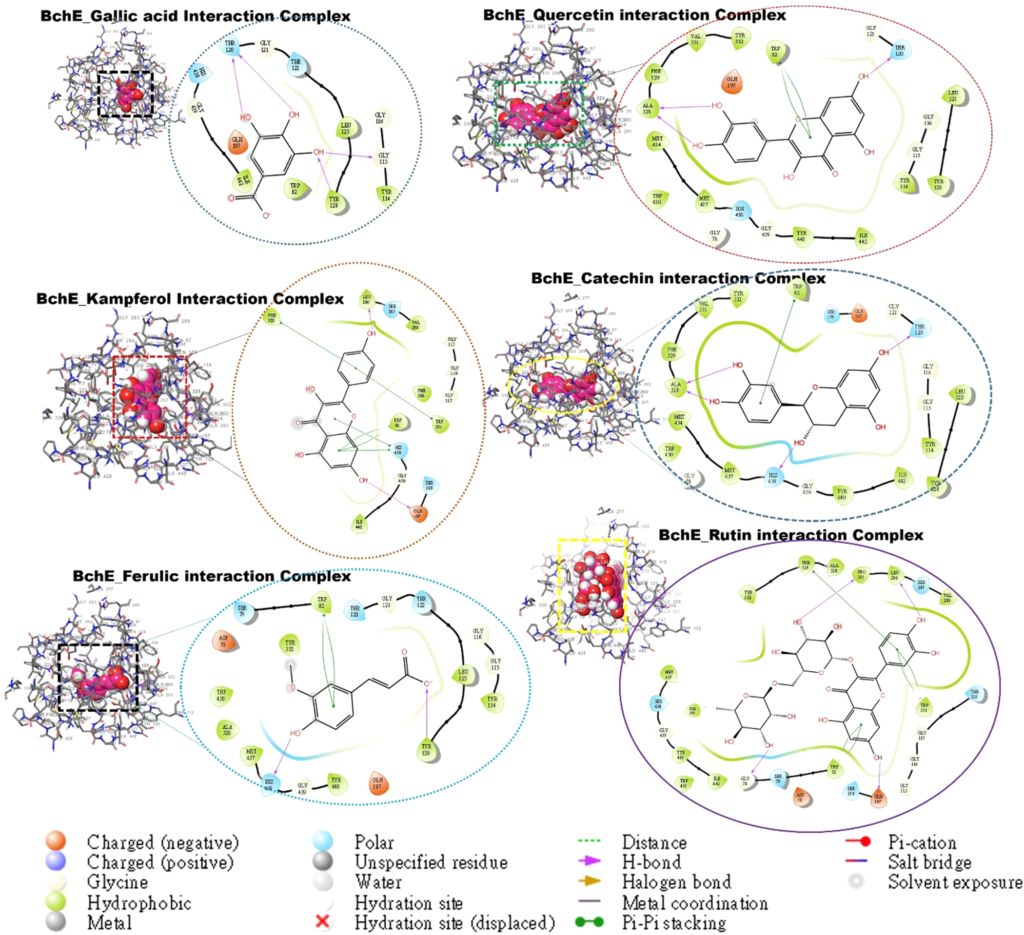
3D and 2D views of the receptor-ligand interactions between butyrylcholinesterase (BChE) and the identified
compounds from ethyl acetate fraction of Clompanus pubescens. Copyright A. S. Onikanni, Simona Cavalu, G. El-Saber Batiha et al.
3D and 2D views of the receptor-ligand interactions between acetylcholinesterase (AChE) and the identified compounds
from ethyl acetate fraction of Clompanus pubescens. Copyright A. S. Onikanni,
Simona Cavalu, G. El-Saber Batiha et al.
2D view of the receptor-ligand interactions between sodium-potassium adenosine triphosphatase (Na+-K+-ATPase) and the identified
compounds from ethyl acetate fraction of Clompanus pubescens. Copyright A. S. Onikanni,
Simona Cavalu, G. El-Saber Batiha et al.
In silico gastrointestinal absorption and Blood Brain Barrier Penetration
modelling of the identified compounds from the ethyl acetate fraction of
Clompanus pubescens. Copyright A. S. Onikanni,
Simona Cavalu, G. El-Saber Batiha et al.

Herein, we evaluated the neuroprotective and antioxidant properties of different fractions (ethyl acetate, N-butanol and residual aqueous) of Clompanus pubescens leaves in streptozotocin (STZ)-induced diabetic rats. Our results revealed a significant elevation in the levels of blood glucose, pro-inflammatory cytokines, lipid peroxidation, neuronal activities of acetylcholinesterase, butyrylcholinesterase, nitric oxide, epinephrine, norepinephrine, and Na+/K+-ATPase in diabetic non treated rats. In addition, decreased levels of enzymatic and non-enzymatic antioxidants were observed. Treatment with different fractions of C. pubescens leaves resulted in significant reversal of the biochemical alteration
and improved the neurocognitive deficit in STZ induced diabetic rats. Copyright A. S. Onikanni, Simona Cavalu, G. El-Saber Batiha et al.

Full text at https://www.sciencedirect.com/science/article/pii/S0753332222001184?via%3Dihub