By T. Bhattacharya, G. A. Borges e Soares, H. Chopra, Md. M. Rahman, Z. Hasan, S. S. Swain and Simona Cavalu
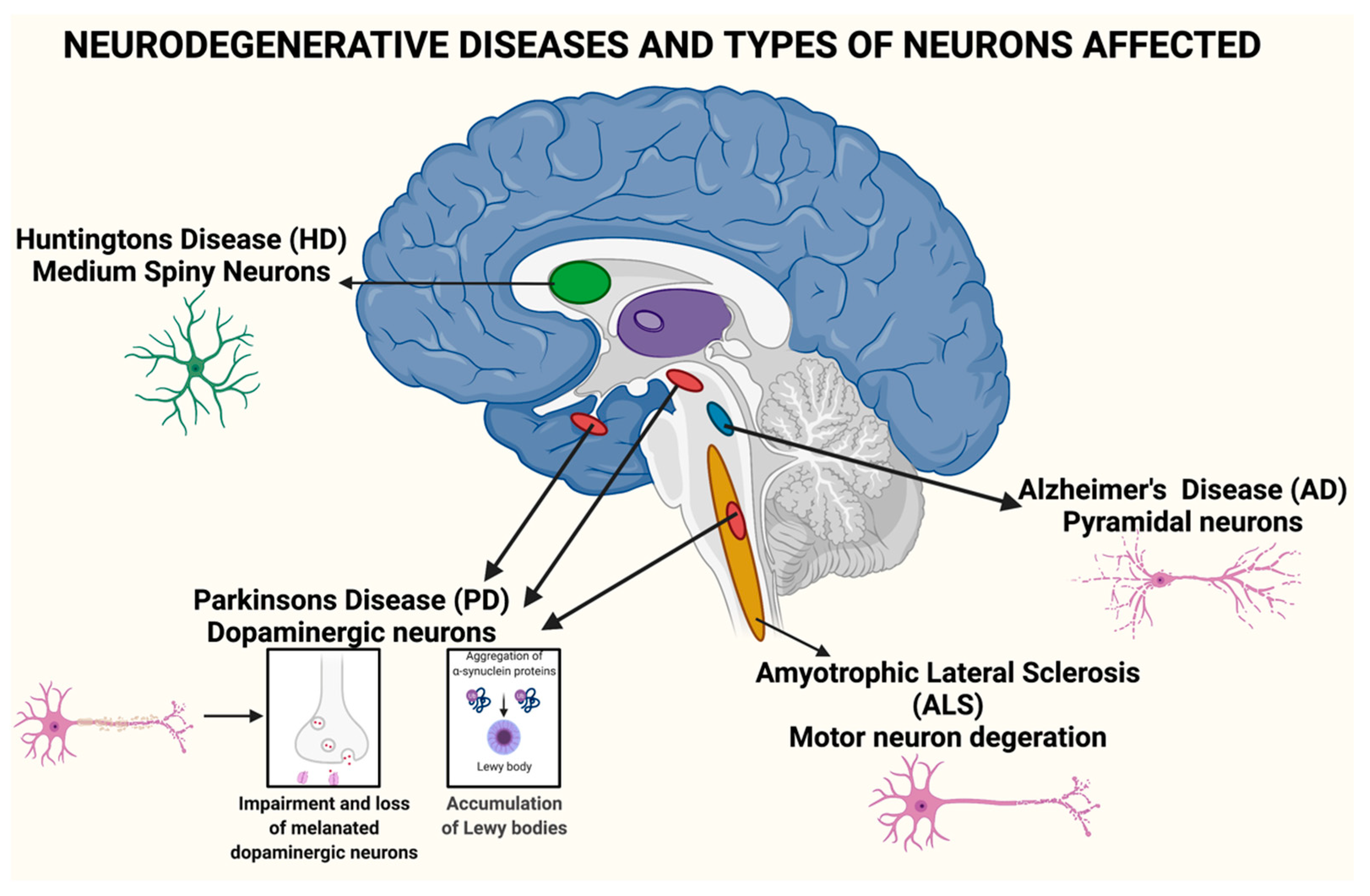
The strategies involved in the development of therapeutics for neurodegenerative disorders are very complex and challenging due to the existence of the blood-brain barrier (BBB), a closely spaced network of blood vessels and endothelial cells that functions to prevent the entry of unwanted substances in the brain. The emergence and advancement of nanotechnology shows favourable prospects to overcome this phenomenon. Engineered nanoparticles conjugated with drug moieties and imaging
agents that have dimensions between 1 and 100 nm could potentially be used to ensure enhanced efficacy, cellular uptake, specific transport, and delivery of specific molecules to the brain, owing to their modified physico-chemical features. The conjugates of nanoparticles and medicinal plants, or their components known as nano phytomedicine, have been gaining significance lately in the development of novel neuro-therapeutics owing to their natural abundance, promising targeted delivery to the brain, and lesser potential to show adverse effects. In the present review, the promising application, and recent trends of combined nanotechnology and phytomedicine for the treatment of neurological disorders (ND) as compared to conventional therapies, have been addressed. Nanotechnology-based efforts performed in bioinformatics for early diagnosis as well as futuristic precision medicine in ND have also been
discussed in the context of computational approach. schematic presentation of nano-informatic (nanotechnology and bioinformatics) in present dementia or neuro-disorder research.
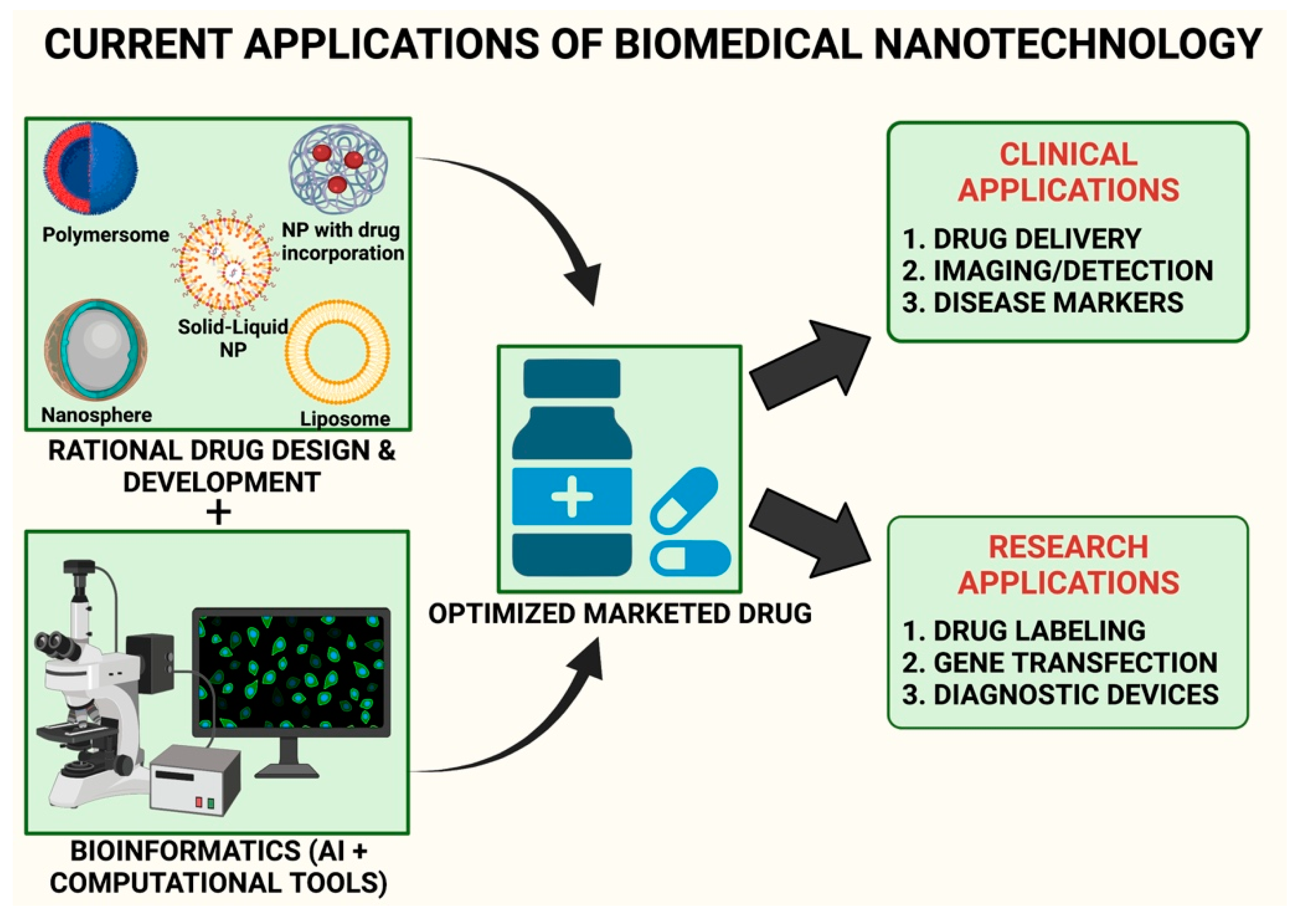
Equal advancements in neurophysiology and neuropathology exploration would help in the advancement in nanotechnology, which can be used to provide CNS recovery and neuroprotection. Accordingly, for utilization of nanotechnology in neural system science and neurosurgery, key factors that require consideration include: (1) breakthrough discoveries and developments in drug science and material science, which can help in the manufacturing of the described methodologies; (2) development and advancement of sub-atomic science, sensory system-based neurophysiology, and neuropathology; and (3) planning and combination of explicit nano-empowered therapies to the CNS, which exploit the initial two factors. As a result, nanotechnology could provide the solution and can offer breakthrough therapies for the management and treatment of NDs and can also be used to bypass the current problem of available neurological therapies i.e., non-specific targeting and lower efficacy rates of drug therapies. Therefore, taken together, neurosurgeons, nervous system specialists, neuroscientists, and drug researchers and architects, should take part in utilizing the power of nanotechnology for drug delivery. Consistent with the profoundly interdisciplinary nature of this space of exploration, it is additionally significant to note that nano-informatics and nanotechnology can also provide innovative headways and progressions that are related to fundamental and clinical neuroscience. Copyright T. Bhattacharya, Simona Cavalu et al.
Full text at https://www.mdpi.com/1996-1944/15/3/804/htm


