Hedgehog signaling mastery: R51211’s promise in augmenting the
therapeutic efficacy of sorafenib
By A. M. Hasan, Simona Cavalu, Sameh Saber et al.
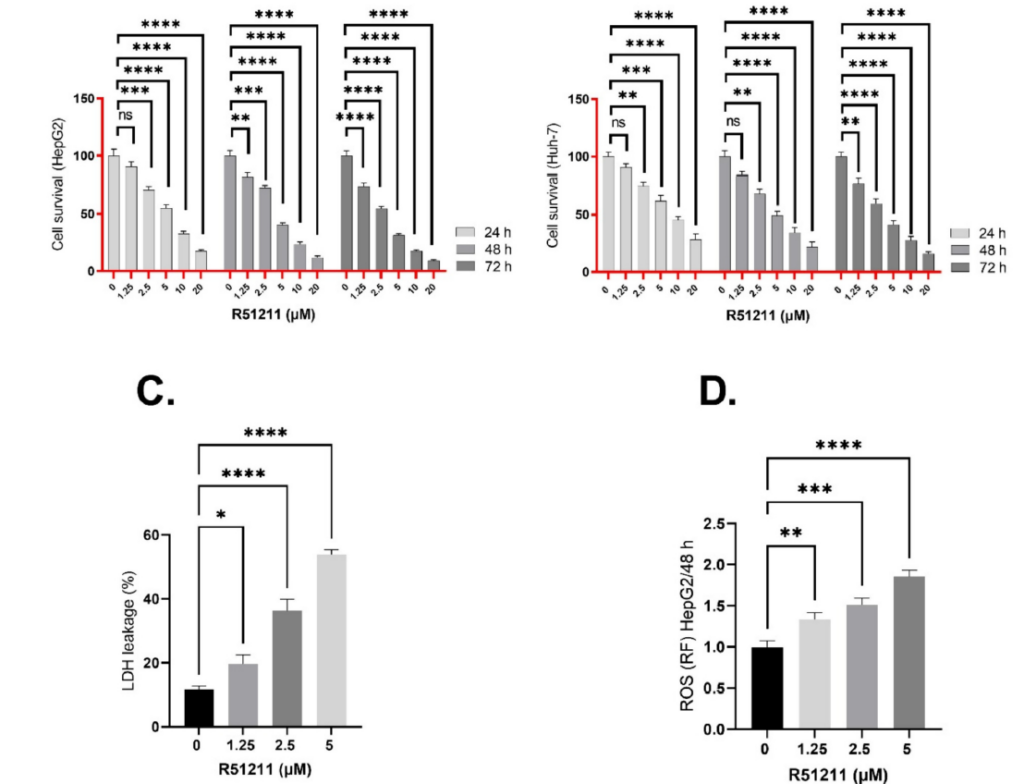
The role of hedgehog signaling in sorafenib resistance has been also examined in HCC. R51211, known as itraconazole, has been safely employed in clinical practice. Through in vitro and in vivo investigations, we assessed the potential of R51211 to enhance the therapeutic efficacy of sorafenib by inhibiting the hedgehog signaling. This dual therapy exhibited an increased capacity to induce apoptosis, as evidenced by alterations in the Bax/BCL-2 ratio and caspase-3, along with a propensity to promote autophagy, as indicated by changes in BECN1, p62, and the LC3I/LC3II ratio. Furthermore, the combination therapy resulted in significant reductions in biomarkers associated with liver preneoplastic alterations, improved liver microstructure, and mitigated changes in liver function enzymes. Copyright Simona Cavalu et al.
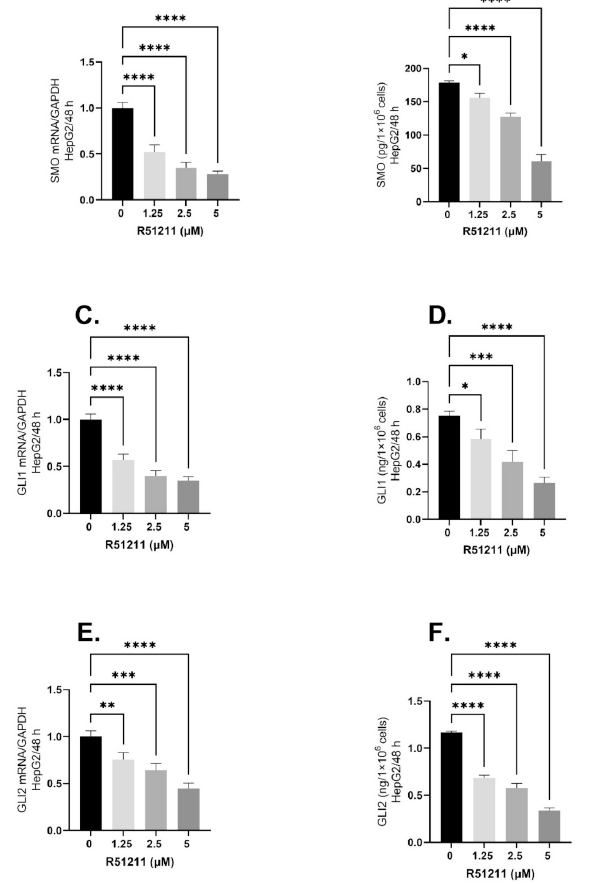
expression level (B), the mRNA expression of GLI1 (C), GLI1 protein expression
level (D), the mRNA expression of GLI2 (E), and GLI2 protein expression level
(F). Copyright Simona Cavalu et al.
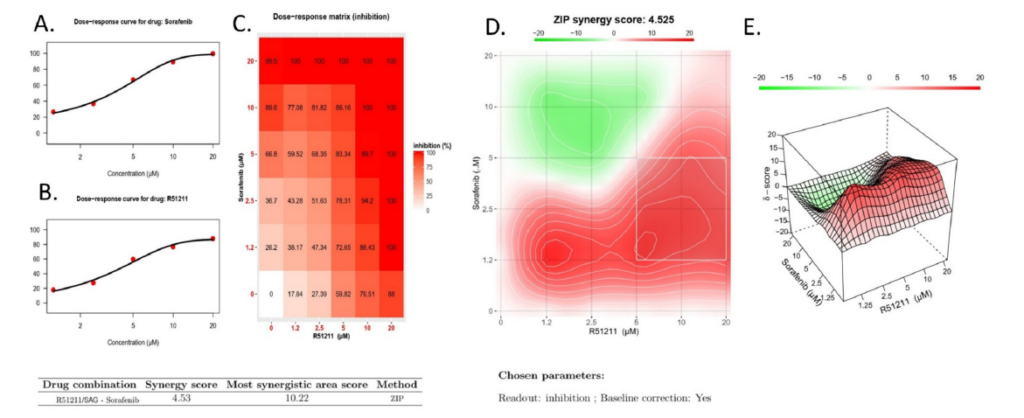
Sorafenib stands as a standard therapy for advanced-stage HCC patients. Despite its widespread use, the therapeutic efficacy of sorafenib is hindered by drug resistance, thereby constraining the number of patients who can derive substantial benefits from this treatment. In the present study, our findings, for the first time revealed the capacity of R51211 to increase the sensitivity of HepG2 cells to the effects of sorafenib as revealed by calculating the synergy scores for R51211 and sorafenib combinations in the absence of the hedgehog activator SAG. Our findings revealed that the use of SAG counteracted the synergistic antiproliferative potential of R51211 with sorafenib in HepG2 cells. Consequently, it can be inferred that the synergistic potential of R51211 with sorafenib is likely mediated through hedgehog inhibition, and the introduction of SAG has a modulating effect on this synergy. Copyright Simona Cavalu et al.
The primary outcome of this study demonstrates the successful augmentation of sorafenib’s therapeutic effectiveness by R51211 in both HepG2 cells and rats subjected to DENA treatment. Nevertheless, additional preclinical investigations are essential to validate the therapeutic potential of the R51211 and sorafenib combination in impeding the progression of liver cancer. Furthermore, it is imperative to explore resistant in vitro and in vivo models of hepatocarcinogenesis to evaluate the capability of
R51211 in overcoming resistance to sorafenib treatment.
Copyright Simona Cavalu et al.
Full text here https://doi.org/10.1016/j.lfs.2024.122791